
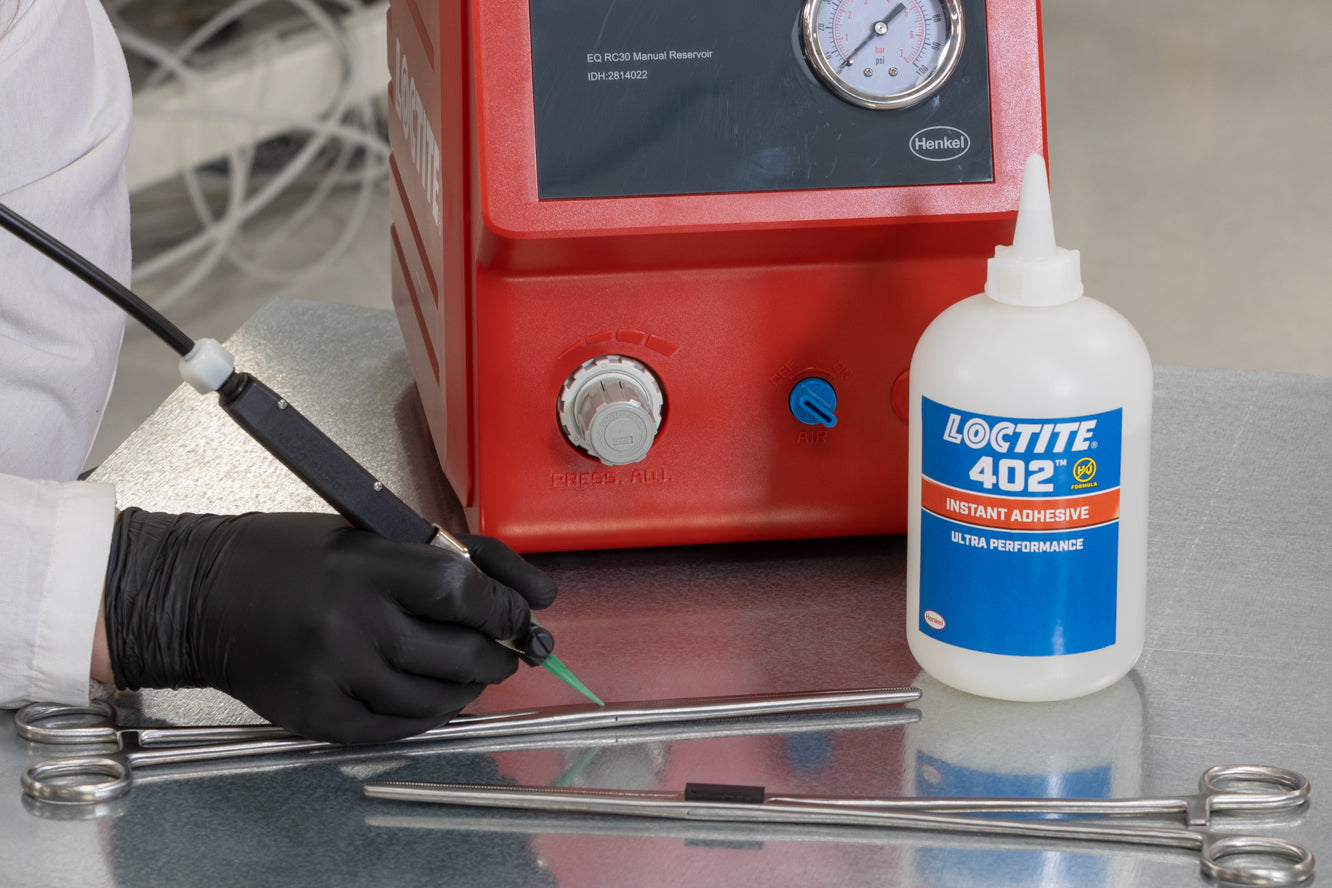
In modern manufacturing environments, adhesive dispensing has become a critical part of production across industries such as electronics, automotive, medical devices, aerospace, and industrial assembly. While selecting the right adhesive is important, the dispensing process itself often determines whether a bond performs reliably over time.
Poor dispensing practices can lead to inconsistent bond lines, material waste, curing defects, equipment downtime, and reduced product quality. This is especially true for UV-curable and light-curable adhesives, where dispensing precision directly impacts curing performance and assembly efficiency.
Understanding the most common adhesive dispensing mistakes can help manufacturers improve production consistency, reduce operational costs, and maximize bonding performance.
1. Using Incompatible Dispensing Components
One of the most common dispensing mistakes is using fluid path materials that are incompatible with the adhesive chemistry. Certain plastics and metals can react with adhesives, causing contamination, degradation, or even premature curing inside the dispensing system.
For light-curable adhesives, incompatible tubing or fittings may trigger unwanted polymerization, leading to clogged dispensing needles and inconsistent flow rates.
To prevent this issue:
- Use chemically compatible tubing and fittings
- Verify compatibility between adhesive and dispensing equipment
- Follow manufacturer recommendations for fluid handling components
Proper material compatibility helps maintain dispensing consistency and extends equipment lifespan.
2. Exposing Light-Curable Adhesives to Ambient Light
UV and light-curable adhesives are highly sensitive to specific wavelengths of light. Exposure to factory lighting or sunlight can prematurely cure the adhesive inside syringes, reservoirs, tubing, or dispensing valves.
This issue commonly results in:
- Needle clogging
- Increased dispensing pressure
- Inconsistent dispense patterns
- Production downtime
- Material waste
Using opaque or UV-blocking tubing can help protect adhesives from unintended exposure. Dispensing systems should also be positioned away from direct sunlight or high-intensity lighting sources.
3. Trapped Air and Bubble Formation
Air bubbles are a major source of dispensing inconsistency. Entrapped air weakens bond strength and creates uneven adhesive coverage.
Common causes of bubbles include:
- Excessive dispensing pressure
- Poorly purged fluid lines
- Long tubing configurations
- Improper adhesive container changes
Air bubbles can cause cosmetic defects, incomplete bonding, and inconsistent curing performance.
To reduce bubble formation:
- Purge dispensing lines properly
- Minimize tubing length
- Use appropriate dispensing pressure
- Maintain stable fluid flow throughout production
For precision dispensing applications, bubble-free material flow is essential for repeatable results.
4. Applying Excessive Dispensing Pressure
Many operators assume increasing air pressure will improve dispensing speed and productivity. However, excessive pressure often creates more problems than solutions.
High pressure can:
- Force air into the adhesive
- Create inconsistent shot sizes
- Cause dripping or stringing
- Increase material waste
Instead of relying solely on pressure, manufacturers should optimize the entire dispensing setup, including:
- Tubing diameter
- Needle size
- Valve selection
- Fluid path configuration
A balanced dispensing system produces better flow control and more accurate adhesive placement.
5. Using Improper Tubing Design
Long or narrow fluid lines create excessive resistance inside dispensing systems. This increases pressure requirements and reduces flow stability.
Poor tubing design can lead to:
- Uneven dispensing
- Pressure fluctuations
- Slower cycle times
- Increased air entrapment
In most cases, shorter tubing with larger inner diameters improves dispensing consistency and reduces strain on the dispensing equipment.
Proper fluid line design becomes even more important in automated dispensing systems where precision and repeatability are critical.
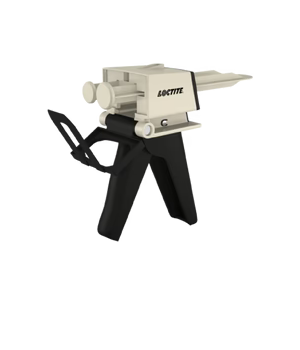
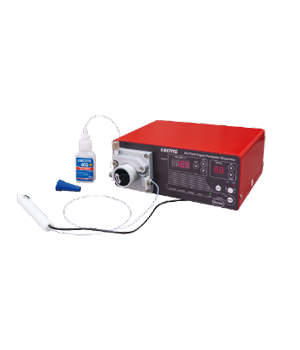
6. Choosing the Wrong Dispensing Valve
Different adhesives require different dispensing technologies. Using the wrong dispensing valve can result in inaccurate dispense volumes, dripping, inconsistent bead sizes, or premature curing.
When selecting a dispensing valve, manufacturers should evaluate:
- Adhesive viscosity
- Cure chemistry
- Dispense volume requirements
- Production speed
- Automation compatibility
Low-viscosity adhesives may require different valve configurations compared to highly viscous structural adhesives.
Working with dispensing specialists can help manufacturers select the correct valve setup for optimal performance.
7. Incorrect UV Curing Setup
For UV and light-curable adhesives, dispensing and curing must work together as a fully optimized process. Even perfectly dispensed adhesive may fail if curing parameters are incorrect.
Common curing mistakes include:
- Incorrect wavelength selection
- Insufficient light intensity
- Improper curing distance
- Inadequate exposure time
These problems may result in:
- Weak bond strength
- Surface tackiness
- Incomplete cure
- Reduced long-term durability
The curing system must match the adhesive’s photoinitiator chemistry to ensure full polymerization and reliable bond performance.
8. Ignoring Preventive Maintenance
Dispensing systems require regular maintenance to maintain accuracy and process stability. Over time, adhesive residue, clogged needles, worn tubing, and contaminated components can reduce dispensing performance.
Preventive maintenance should include:
- Cleaning dispensing needles regularly
- Inspecting tubing for wear or blockage
- Monitoring pressure consistency
- Checking curing system intensity
- Replacing worn fluid path components
Routine maintenance helps reduce downtime and ensures consistent production quality.
Why Proper Adhesive Selection Matters
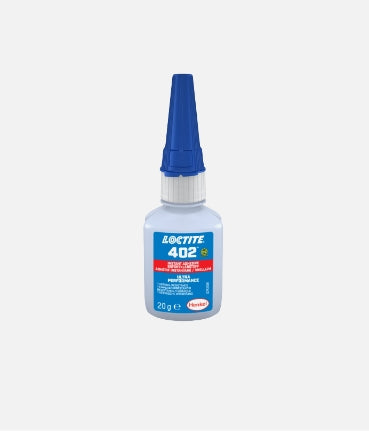
Beyond dispensing setup, choosing a high-performance adhesive is equally important for process reliability. Manufacturers across industries rely on LOCTITE solutions for dependable bonding performance, fast curing, and compatibility with automated dispensing systems.
LOCTITE offers a wide range of industrial adhesive technologies including:
- UV-curable adhesives
- Instant adhesives
- Structural bonding solutions
- Threadlockers
- Retaining compounds
- Industrial sealants
These solutions are designed to support high-speed manufacturing environments while improving dispensing consistency and long-term product reliability.
Conclusion
Adhesive dispensing errors can significantly impact manufacturing efficiency, product quality, and operational costs. Issues such as air bubbles, excessive pressure, improper curing, incompatible materials, and incorrect valve selection are among the most common causes of dispensing failure.
By optimizing dispensing processes and using reliable adhesive technologies, manufacturers can improve bond strength, reduce downtime, and achieve more consistent production results.
For manufacturers looking to improve dispensing reliability and assembly performance, LOCTITE adhesives provides advanced adhesive solutions engineered for precision dispensing, rapid curing, and demanding industrial applications.
Contact Us today to find the right adhesive and dispensing solution for your production needs.
FAQ
What causes bubbles during adhesive dispensing?
Bubbles are commonly caused by excessive air pressure, trapped air in fluid lines, improper purging, or poorly designed tubing configurations.
Why do UV adhesives cure inside dispensing systems?
UV adhesives may prematurely cure when exposed to ambient light or sunlight. Using UV-blocking tubing and controlled lighting environments helps prevent this issue.
How can I improve dispensing consistency?
Manufacturers can improve consistency by optimizing pressure settings, using proper tubing sizes, selecting suitable dispensing valves, and performing regular maintenance.
Why is dispensing pressure important?
Excessive pressure can introduce air into the adhesive, causing bubbles, dripping, and inconsistent dispense volumes.
What are the benefits of LOCTITE adhesives?
LOCTITE adhesives are known for reliable bonding performance, compatibility with automated dispensing systems, rapid curing technologies, and industrial-grade durability.
Leave a comment
All comments are moderated before being published.
This site is protected by reCAPTCHA and the Google Privacy Policy and Terms of Service apply.