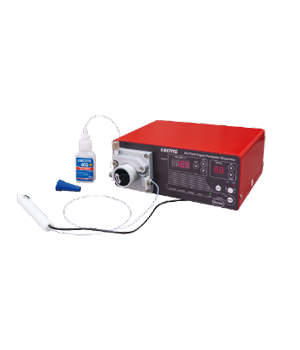
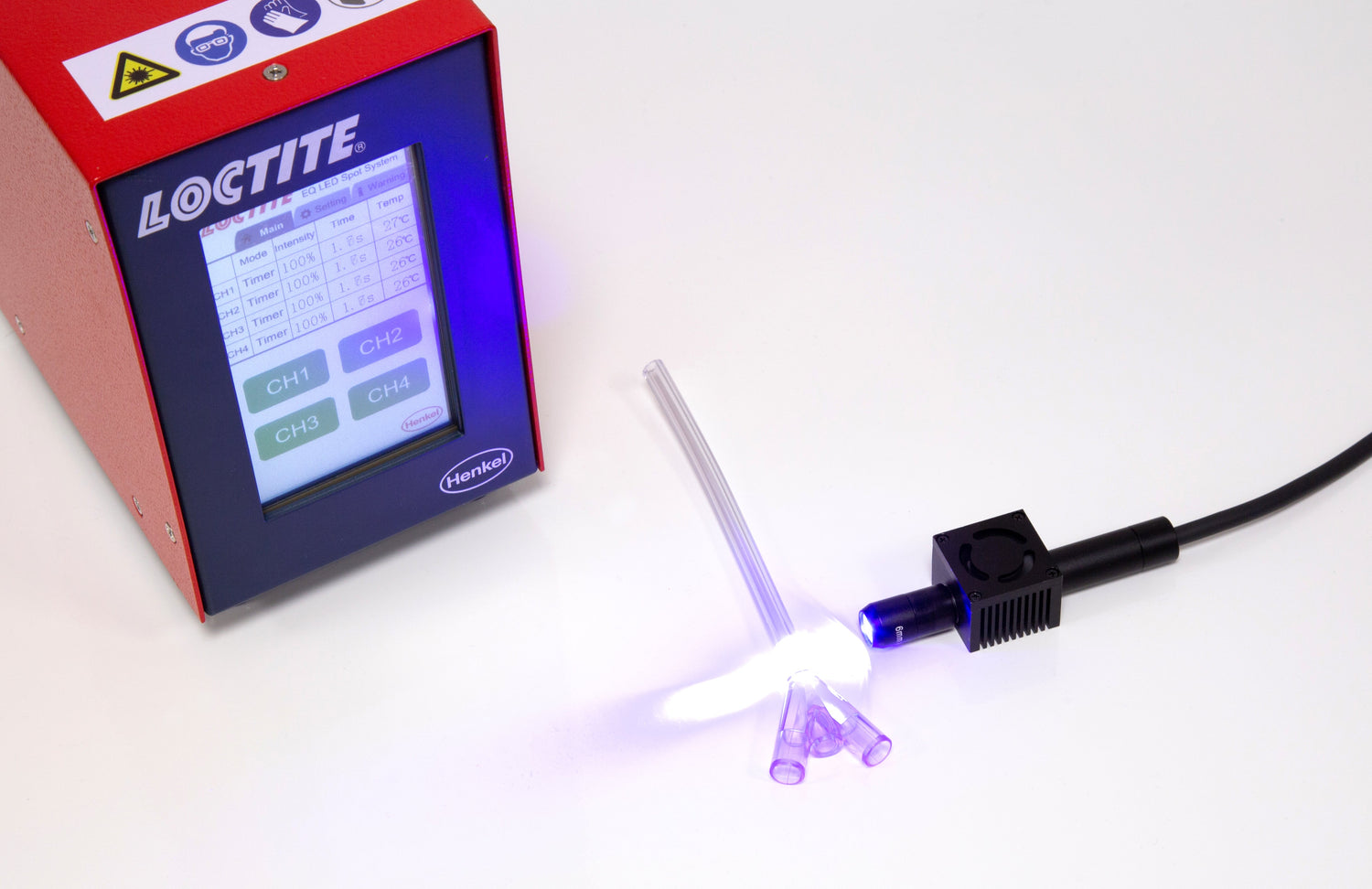
An ultraviolet (UV) curing system is a technology that uses ultraviolet light to instantly cure or harden specially formulated materials such as adhesives, coatings, and inks. Unlike traditional drying methods that rely on heat or air evaporation, UV curing works through a photochemical reaction. When exposed to UV light, photoinitiators within the material trigger rapid polymerization, transforming liquid substances into solid, durable finishes within seconds.
This fast, efficient process has made UV curing systems increasingly popular across industries like electronics, automotive, medical devices, and manufacturing.
How Does UV Curing Work?
At the core of any UV curing system are three key components:
- UV Light Source: Typically LED or mercury lamps that emit specific wavelengths of ultraviolet light.
- Photoinitiators: Chemical compounds in the adhesive or coating that react when exposed to UV light.
- Formulated Material: UV-curable adhesives, inks, or coatings designed to harden upon exposure.
When the UV light hits the material, the photoinitiators absorb the energy and initiate a rapid curing reaction. This process can take place in a matter of seconds, significantly reducing production time compared to conventional curing methods.
Key Benefits of UV Curing Systems
1. Instant Curing
UV systems dramatically reduce curing time from minutes or hours to seconds, improving productivity and throughput.
2. Energy Efficiency
Since UV curing doesn’t rely on high heat, it consumes less energy and reduces operational costs.
3. Superior Bond Strength
UV-cured materials often deliver strong, durable bonds with excellent resistance to chemicals, moisture, and temperature changes.
4. Precision and Control
UV curing allows for targeted application, only areas exposed to light will cure, making it ideal for intricate assemblies.
5. Eco-Friendly Process
With low volatile organic compound (VOC) emissions, UV curing is a cleaner and more environmentally friendly solution.
Common Applications of UV Curing Systems
UV curing technology is widely used in:
- Electronics manufacturing: bonding components and protecting circuits
- Medical device assembly: precision bonding of syringes, catheters, and masks
- Automotive industry: coatings and adhesive bonding
- Printing and packaging: fast-drying inks and finishes
- Optical applications: lens bonding and fiber optics
Its versatility makes it an essential tool in modern high-speed production environments.
Why Choose Loctite UV Curing Systems?
When it comes to reliable UV curing solutions, Loctite stands out as a global leader. Their UV curing systems are engineered to deliver consistent performance, precision, and efficiency across a wide range of industrial applications.
Key Advantages of Loctite UV Systems:
- Advanced LED Technology: Provides consistent intensity and longer lifespan compared to traditional lamps
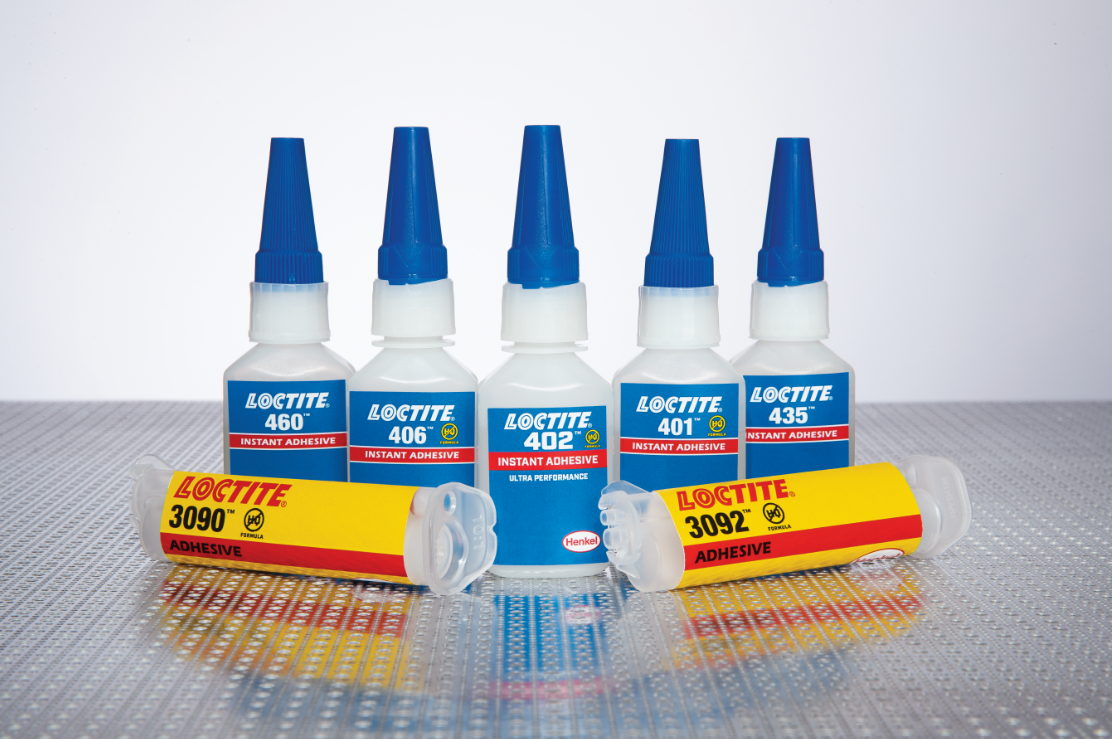
- Wide Range of UV Adhesives: Tailored solutions for plastics, glass, and metals
- Process Reliability: Designed for repeatable, high-quality curing results
- Integration Flexibility: Easily incorporated into automated production lines
- Global Support: Backed by technical expertise and application engineering support
Whether you're in electronics, medical manufacturing, or general assembly, Loctite UV curing systems offer dependable solutions that improve productivity and product quality.
Get Expert Advice for Your Application
Choosing the right UV curing system depends on factors like material type, production speed, and application requirements. A tailored solution ensures maximum efficiency and performance.
Ready to upgrade your production process?
Request a consultation today to discover the best UV curing system for your business. Henkel's experts can help you select the right equipment and adhesives to optimize your operations and achieve superior results.

Frequently Asked Questions (FAQ)
1. What materials can be cured using UV systems?
UV curing works with specially formulated adhesives, coatings, and inks designed to react to ultraviolet light.
2. Is UV curing safe?
Yes, when proper shielding and safety measures are in place, UV curing systems are safe for industrial use.
3. What is the difference between UV LED and mercury lamps?
UV LED systems are more energy-efficient, have longer lifespans, and generate less heat compared to traditional mercury lamps.
4. Can UV curing be used on all surfaces?
Not all materials are suitable. The substrate must allow UV light penetration or be compatible with UV-curable formulations.
5. How fast is the curing process?
Most UV curing processes take just a few seconds, depending on the material and light intensity.
发表评论
所有评论在发布前都会经过审核。
此站点受 reCAPTCHA 保护,并且 Google 隐私政策和服务条款适用。