
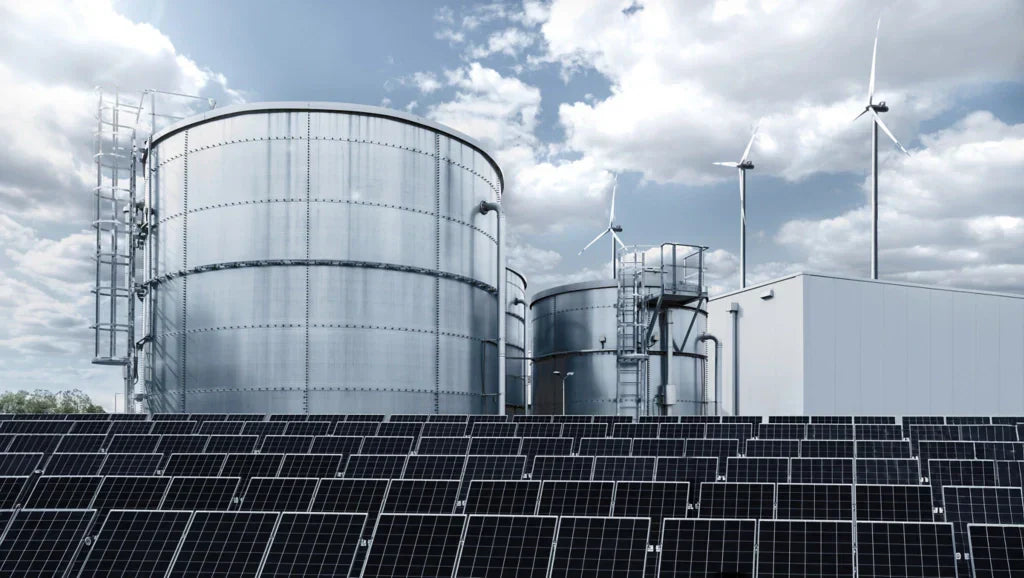
Hydrogen: Powering a Cleaner Future
Hydrogen is quickly emerging as one of the most promising alternative energy sources. Its abundance, energy density, and potential to drastically reduce greenhouse gas emissions make it a cornerstone of the global clean energy transition.
However, the adoption of hydrogen brings unique engineering challenges — especially when it comes to managing leaks at system joints and connections. Hydrogen’s small molecular size and high diffusivity make it extremely difficult to contain, demanding advanced sealing technologies to ensure safety, reliability, and efficiency.
Why Sealing Is Critical in Hydrogen Applications
Across hydrogen production, storage, and delivery systems, flanged connections play a vital role. Found in tanks, pipes, compressors, and valves, these connections must maintain absolute tightness under demanding conditions.
Even minute imperfections can allow hydrogen to escape, posing risks such as:
- Efficiency loss due to gas leakage
- Increased risk of fire or explosion
- Material degradation and hydrogen embrittlement
That’s why choosing the right sealing materials, flange design, and clamping system is crucial. Robust sealing ensures system integrity, even under fluctuating temperatures, pressures, and mechanical stresses.
Anaerobic Sealants: A Game-Changer for Hydrogen Systems
Anaerobic adhesives and sealants offer a next-generation solution to hydrogen sealing challenges. These materials cure in the absence of air when confined between metal surfaces, forming a tough thermoset polymer that creates a mechanical and chemical seal.
When applied as a liquid, anaerobic sealants:
- Fill surface imperfections and voids between metal flanges
- Rapidly cure in oxygen-free conditions
- Provide a clean, vibration-resistant, leak-free joint
Unlike conventional gaskets, their performance isn’t dependent solely on flange compression. The cured seal offers resistance to vibration, temperatures up to 200°C, and pressures up to rated burst limits — ideal for hydrogen-rich environments.
Testing the Performance: Pressure Drop Method
To validate the reliability of anaerobic sealants in hydrogen service, Henkel commissioned a third-party laboratory to conduct hydrogen gas leak tests using the pressure drop method.
Test setup:
- 12 assemblies (two sealants per device)
- 100% hydrogen gas environment
- Flanges per ASME B31.12-2023 hydrogen piping code
- Class 300 ½” NPT threaded flanges with Schedule 80 304 stainless steel fittings
- Tested under two pressure and temperature conditions
Each sample was monitored for pressure stability, temperature consistency, and potential leakage. The pressure drop method is a rigorous, industry-standard approach that detects even the smallest leaks by measuring pressure changes over time in a sealed system.

Application and Setup
During testing, LOCTITE® 510, 518 and 574 was applied correctly between the flange faces, following standard anaerobic application practices:
- Clean and degrease both metal surfaces.
- Apply a thin, even layer of sealant.
- Assemble components before curing begins.
- Allow full cure under confinement (absence of air).
Each test was configured to measure sealant performance under increasing temperature and pressure conditions.
Results: Proven Sealing Reliability
- Test conditions: 41 bar, ambient temperature, 18-hour duration
- Result: No leak detected.
- The system maintained constant pressure, confirming an effective hydrogen-tight seal.

- Test conditions: 20 bar, 80°C
- Result: No pressure drop observed — full integrity maintained.
- One sample was inadvertently pressurized beyond target but remained stable, further demonstrating robustness.

- Test conditions: 20 bar, 80°C
- Result: No apparent pressure decrease, indicating zero leakage.
- Samples withstood higher pressures without degradation or leak formation.

Across all tests, the temperature and pressure plots remained steady, confirming that anaerobic sealants deliver consistent and leak-free performance even under demanding hydrogen system conditions.
Key Takeaways
- Anaerobic sealants eliminate leak paths that traditional gaskets can’t seal.
- No dependency on flange compression means greater flexibility in assembly.
- Validated through third-party testing with 100% hydrogen under ASME B31.12 conditions.
- LOCTITE® 510, 518, and 574 proved effective for high-pressure, high-temperature hydrogen systems.
FAQs: Hydrogen Sealing and Anaerobic Technology
1. Why are hydrogen leaks so difficult to prevent?
Hydrogen is the smallest molecule in existence, capable of permeating tiny flaws and gaps in seals and materials that other gases cannot pass through.
2. What makes anaerobic sealants ideal for hydrogen systems?
They cure in confined metal-to-metal joints without air, creating a durable, polymeric seal that resists pressure, temperature, and vibration.
3. How does the pressure drop method work?
The method measures pressure stability in a sealed hydrogen system. Any leakage results in a measurable pressure decrease, making it a sensitive test for sealing performance.
4. What temperatures can LOCTITE® anaerobic sealants withstand?
They are designed to perform reliably up to 200°C, depending on the product grade and application.
5. Are these sealants suitable for other gases or fluids?
Yes. LOCTITE® anaerobic sealants can be used for both gaseous and liquid media, making them versatile for various industrial systems.
Conclusion
As hydrogen continues to play a pivotal role in achieving a low-carbon future, ensuring safe, leak-free connections becomes a top engineering priority. Henkel’s LOCTITE® anaerobic sealants have proven through rigorous testing that they can meet the demands of hydrogen systems — delivering reliable, efficient, and durable sealing performance under the most challenging conditions.

Leave a comment
All comments are moderated before being published.
Situs ini dilindungi oleh reCAPTCHA dan berlaku Kebijakan Privasi dan Persyaratan Layanan Google.