
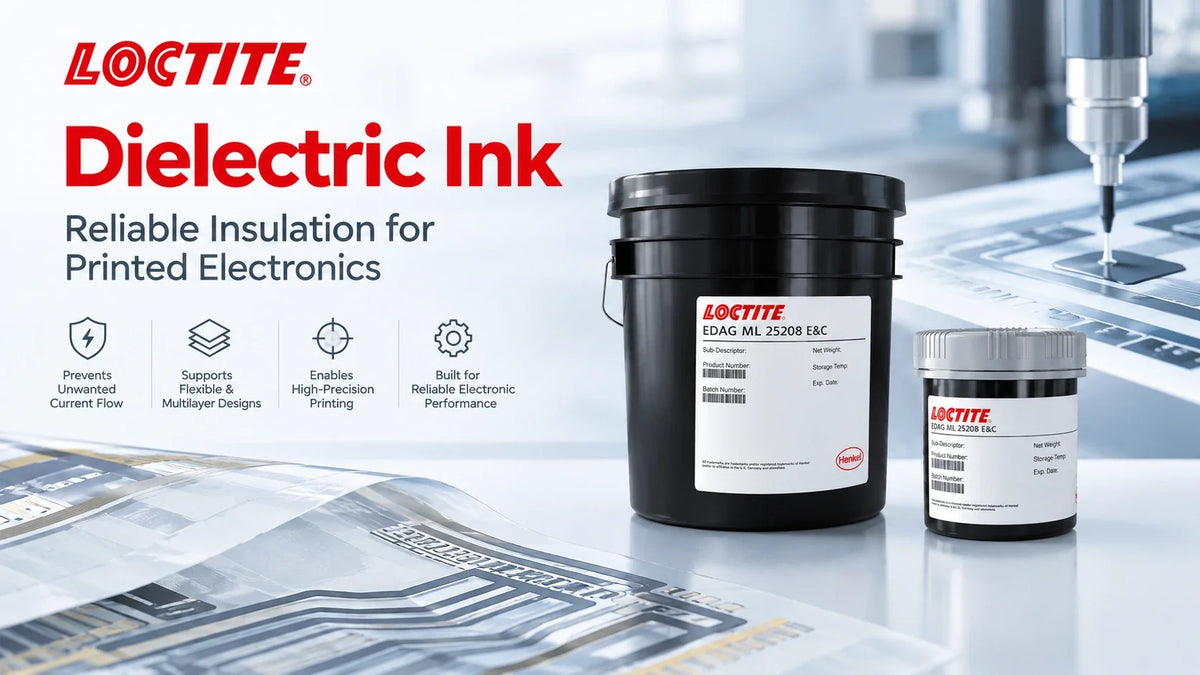
What Is Dielectric Ink?
Dielectric ink is an electrically insulating material used in printed electronics to prevent unwanted electrical conduction between conductive components. It is commonly applied to substrates such as plastic films and other materials to create insulating layers, protect circuit structures, and support the manufacture of flexible and printed electronic devices.
Unlike conductive ink, which carries electrical current, dielectric ink helps control where current can and cannot flow. This makes it an important material in applications such as printed circuit structures, membrane switches, touch sensors, flexible electronics, and other electronic components that require controlled electrical insulation.
For manufacturers developing printed electronics, choosing the right dielectric ink is essential for achieving reliable electrical performance, consistent printing quality, and efficient production.
How Does Dielectric Ink Work?
Dielectric ink is deposited onto a substrate through a suitable printing process, such as screen printing or another compatible coating method. Once processed or cured according to its specifications, it forms an electrically insulating layer.
This layer can separate conductive traces, prevent electrical short circuits, and provide insulation between different parts of an electronic structure. Depending on the formulation and application, dielectric ink may also provide surface protection or help create specific functional layers in a multilayer printed circuit.
The performance of dielectric ink depends on several factors, including dielectric strength, film thickness, adhesion, curing conditions, substrate compatibility, and environmental resistance. These factors should be evaluated against the requirements of the finished electronic device.
Key Applications of Dielectric Ink
Dielectric ink is widely used in printed electronics where thin, controlled insulating layers are required.
1. Flexible and printed electronics
Flexible electronic devices often use polymer films and other lightweight substrates. Dielectric ink helps create insulating layers without relying on bulky conventional components, supporting compact and flexible designs.
2. Membrane switches and touch interfaces
Membrane switches and printed control panels may contain multiple conductive layers. Dielectric ink helps separate these layers and supports reliable switching and signal control when correctly designed and applied.
3. Printed circuit structures
In printed electronic circuits, dielectric materials can insulate conductive traces and enable multilayer designs. The ink must be compatible with the conductive materials and the manufacturing process to achieve the required electrical performance.
4. Sensors and electronic components
Printed sensors and other electronic devices may require insulating layers to isolate circuit elements or control electrical interactions. The appropriate dielectric ink depends on the sensor design, operating environment, and performance requirements.
Benefits of Using Dielectric Ink
Selecting a suitable dielectric ink can deliver several manufacturing and product-design benefits.
- Electrical insulation: Helps prevent unwanted current flow and short circuits between conductive features.
- Design flexibility: Supports thin-film and printed electronic designs on suitable substrates.
- Multilayer functionality: Enables insulating layers between conductive patterns in compatible circuit architectures.
- Manufacturing efficiency: Screen printing and other compatible deposition methods can support repeatable production at scale.
- Application-specific performance: Different formulations can be selected according to adhesion, curing, film properties, and substrate requirements.
Actual results depend on the ink formulation, printing conditions, substrate, and final application. Manufacturers should validate performance under their intended operating conditions.
How to Choose the Right Dielectric Ink
Choosing dielectric ink involves more than comparing product specifications. The material must work with the complete production process.
Electrical requirements: Review dielectric strength, insulation resistance, operating voltage, and the required insulating film thickness.
Substrate compatibility: Confirm adhesion and compatibility with the intended material, including flexible films and other relevant substrates.
Printing method: Check whether the ink is suitable for the intended printing equipment, mesh, deposition process, and required feature resolution.
Curing requirements: Evaluate the specified curing temperature, time, and equipment. These conditions must be compatible with the substrate and other printed layers.
Chemical and environmental resistance: Consider exposure to moisture, cleaning agents, temperature changes, and other operating conditions relevant to the finished product.
Compatibility with conductive inks: For multilayer printed electronics, verify that the dielectric ink works with the conductive ink, underlying layers, and subsequent processing steps.
Testing under representative production conditions is recommended before introducing a new material into full-scale manufacturing.
Explore LOCTITE® Dielectric Ink at Hong Teck Hin
For manufacturers looking for dielectric ink for printed electronics, the LOCTITE® range is worth exploring as part of a broader electronic materials selection process.
Hong Teck Hin Hardware & Machinery provides access to the LOCTITE® dielectric ink range to help businesses identify materials suited to their application requirements. Whether you are developing printed circuits, membrane switches, flexible electronics, or other electronic components, selecting the right ink requires consideration of electrical performance, substrate compatibility, printing methods, and curing conditions.
Explore the our LOCTITE® Dielectric Ink range to review available products and identify a suitable solution for your manufacturing process.
Need help selecting the right dielectric ink? Contact us to discuss your application, production requirements, and material compatibility needs.
Frequently Asked Questions (FAQs)
1. What is dielectric ink used for?
Dielectric ink is used to create electrically insulating layers in printed electronics. Common applications include membrane switches, flexible circuits, touch interfaces, sensors, and multilayer electronic structures.
2. What is the difference between dielectric ink and conductive ink?
Conductive ink carries electrical current and forms conductive patterns. Dielectric ink provides electrical insulation, helping separate conductive features and reduce the risk of unwanted electrical connections.
3. Can dielectric ink be used on flexible substrates?
Yes, certain dielectric ink formulations are designed for suitable flexible substrates. However, compatibility depends on the specific ink, substrate material, curing conditions, and required flexibility. Always check the product specifications.
4. Which printing methods are suitable for dielectric ink?
Screen printing is one common method, although suitability depends on the formulation and intended application. Manufacturers should confirm the recommended deposition method, equipment settings, and processing conditions for the selected product.
5. How do I choose the right LOCTITE® dielectric ink?
Consider the required electrical insulation properties, substrate, printing method, curing conditions, film thickness, and compatibility with other printed materials. Consult the product technical data sheet and contact Hong Teck Hin for assistance identifying a suitable option.
6. Where can I buy LOCTITE® dielectric ink in Singapore?
You can explore the available products through LOCTITE® Dielectric Ink collection.
Contact us for product information and application guidance.
Leave a comment
All comments are moderated before being published.
Situs ini dilindungi oleh reCAPTCHA dan berlaku Kebijakan Privasi dan Persyaratan Layanan Google.